Hire · Quick commerce
Hire a developer for a quick commerce app
A developer can only price what you describe. Fill the fields, and the brief writes itself.
The full explanation
What does a developer for an edtech startup do?
An education app lets students access study materials and join live classes online. These apps offer features like recorded classes, online lessons, interactive exercises and quizzes. They work on smartphones, tablets and computers.
Instead of a full app, you could start with simpler tools. Some AI app builders and no-code platforms let you create basic courses or quizzes without custom coding. This can save time and money if your needs are straightforward. For more control and unique features, custom development is better. Compare your needs with what AI app builders and no-code tools can do.
How much does it cost to build an edtech app?
A basic quiz or test-prep app costs ₹3 to 8 lakhs. This covers multiple-choice questions, timers, scores and user accounts. The cost rises if you add video explanations or adaptive learning paths.
An LMS or course platform costs ₹6 to 15 lakhs. This includes video hosting, progress tracking, course dashboards and payment integration. Prices vary based on how many instructors can upload and whether content is drip-fed over time.
A live class platform costs ₹10 to 20 lakhs. You pay more for real-time video with low latency, breakout rooms, whiteboards and attendance reports. Costs depend on whether you use third-party tools like Agora or build custom streaming.
A full edtech platform like BYJU’s starts at ₹20 lakhs and goes up sharply. These systems bundle live classes, doubt-solving, AI recommendations and parent dashboards. The final cost depends on scale, branding and how much automation you want.
These prices are for a first version with core features. They do not include ongoing hosting, marketing or team salaries. Design, content creation and teacher training are billed separately.
What features drive up the cost the most?
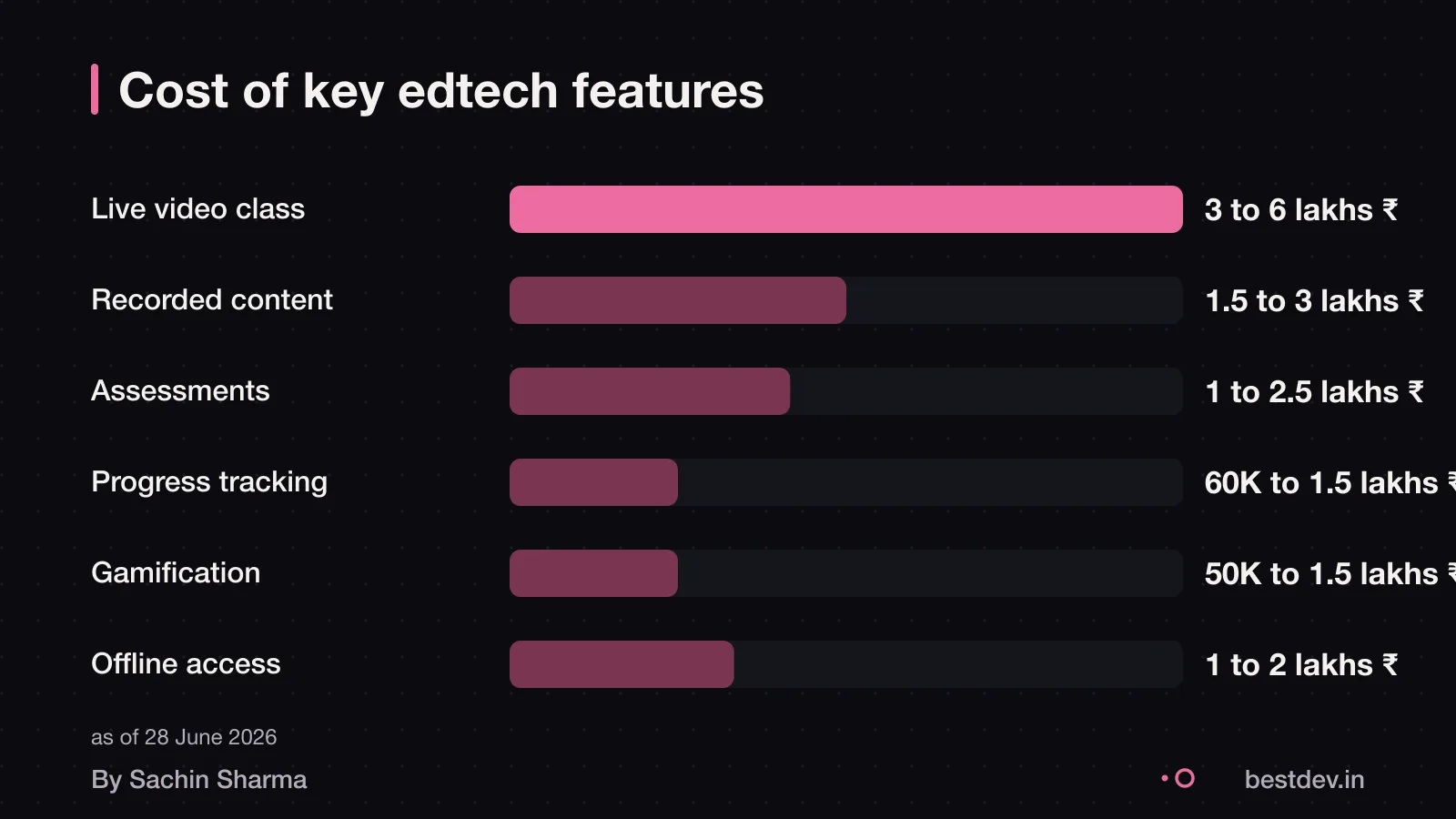
Live video classes cost ₹3 to 6 lakhs.
Recorded content streaming costs ₹1.5 to 3 lakhs.
Assessments cost ₹1 to 2.5 lakhs.
Progress tracking costs ₹60,000 to 1.5 lakhs.
Gamification costs ₹50,000 to 1.5 lakhs.
Offline access adds ₹1 to 2 lakhs to the total build cost. This is because the app must handle local storage, encryption to prevent copying, and conflict resolution during sync.
How long does it take to build an edtech app?
A quiz app takes 2 to 3 months to build. This includes setting up user login, test sections, timers, result tracking, and basic analytics. For example, a state board exam prep app with 10 subjects and mock tests fits this timeline.
An LMS or course platform takes 3 to 5 months. You need course uploads, progress tracking, quizzes, certificates, and admin dashboards. A platform for NEET coaching with video lectures and PDF notes would fall here.
A live class platform takes 4 to 6 months. This covers video calling, whiteboard tools, chat, attendance, and recording. For example, a CBSE-aligned live tuition app with breakout rooms and homework submission needs this time.
These timelines assume clear goals, prompt feedback, and no major feature changes mid-way. Delays happen if you pause development or add complex AI features later.
What is the hiring process for an edtech developer?
To hire an edtech developer, look for one who understands modern learning trends, student needs. The tech used in education apps, as these are traits of a good development partner. This matters because your app must support how students learn now, not just work as software. Ask for examples of past education projects and how they handled student progress tracking or engagement.
During the project, your developer should provide reports, timelines and explainers, and respond to your feedback, as clear communication makes the process smoother.
Look for a company that gives straight pricing, explicit contracts, and timelines. If using a platform like Freelancer, use the 'Post a Project' feature to share what you need.
For a full step-by-step process, see our step-by-step guide to hiring a developer in India.
What should I include in my project brief?
Start your project brief with a clear purpose and user journey. Simple, enticing interfaces that are easy to use can help engage users of all ages. Design simple and easy-to-use interfaces for all ages, as suggested for edtech apps.
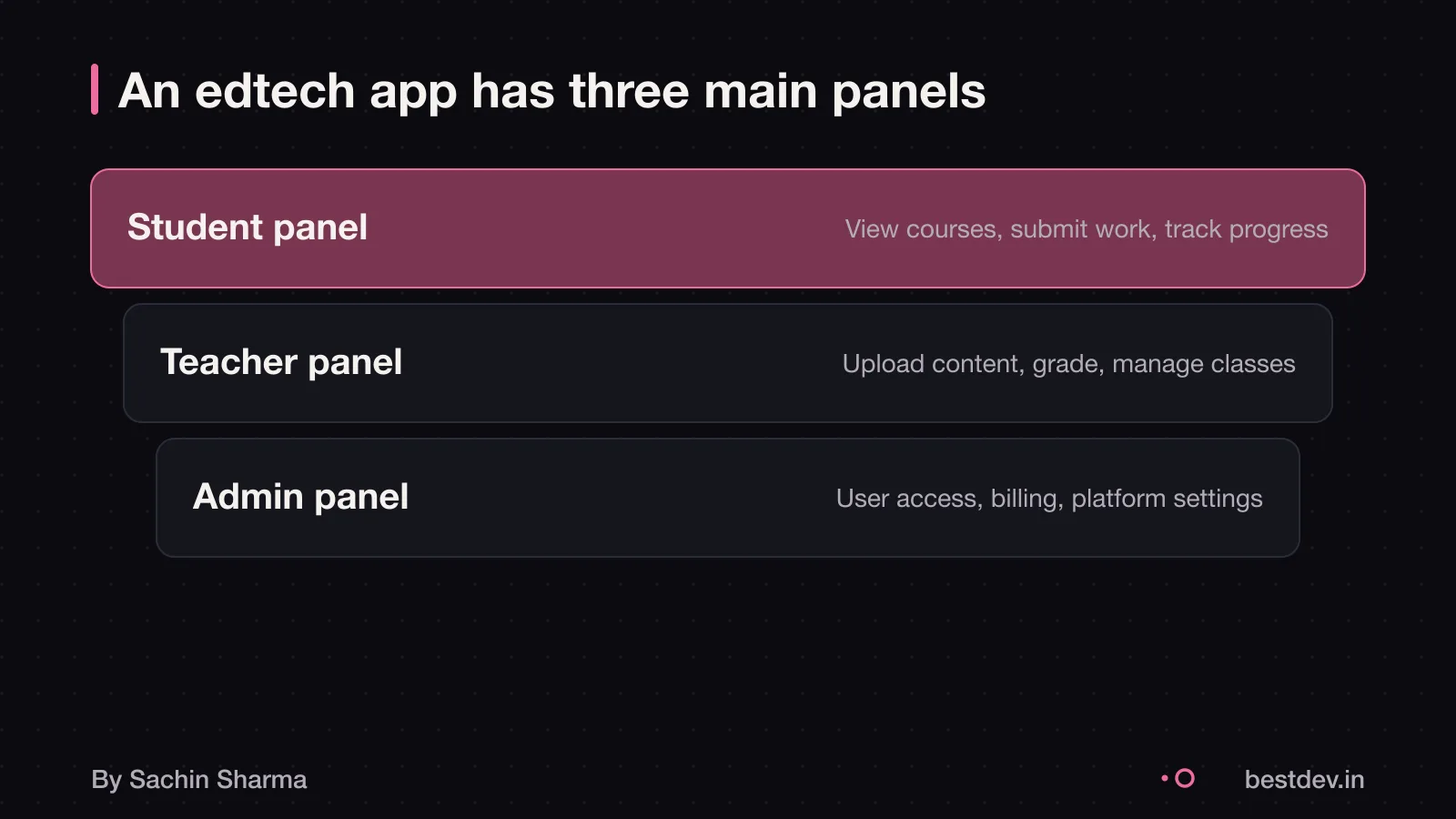
Define separate student, teacher and admin panels from the start. This helps meet different user needs.
Plan for offline access because many users in India face slow or unreliable internet. This includes people in villages, hostels or on trains.
Use a one-page app brief template to capture all this clearly and avoid scope creep.
Who owns the source code?
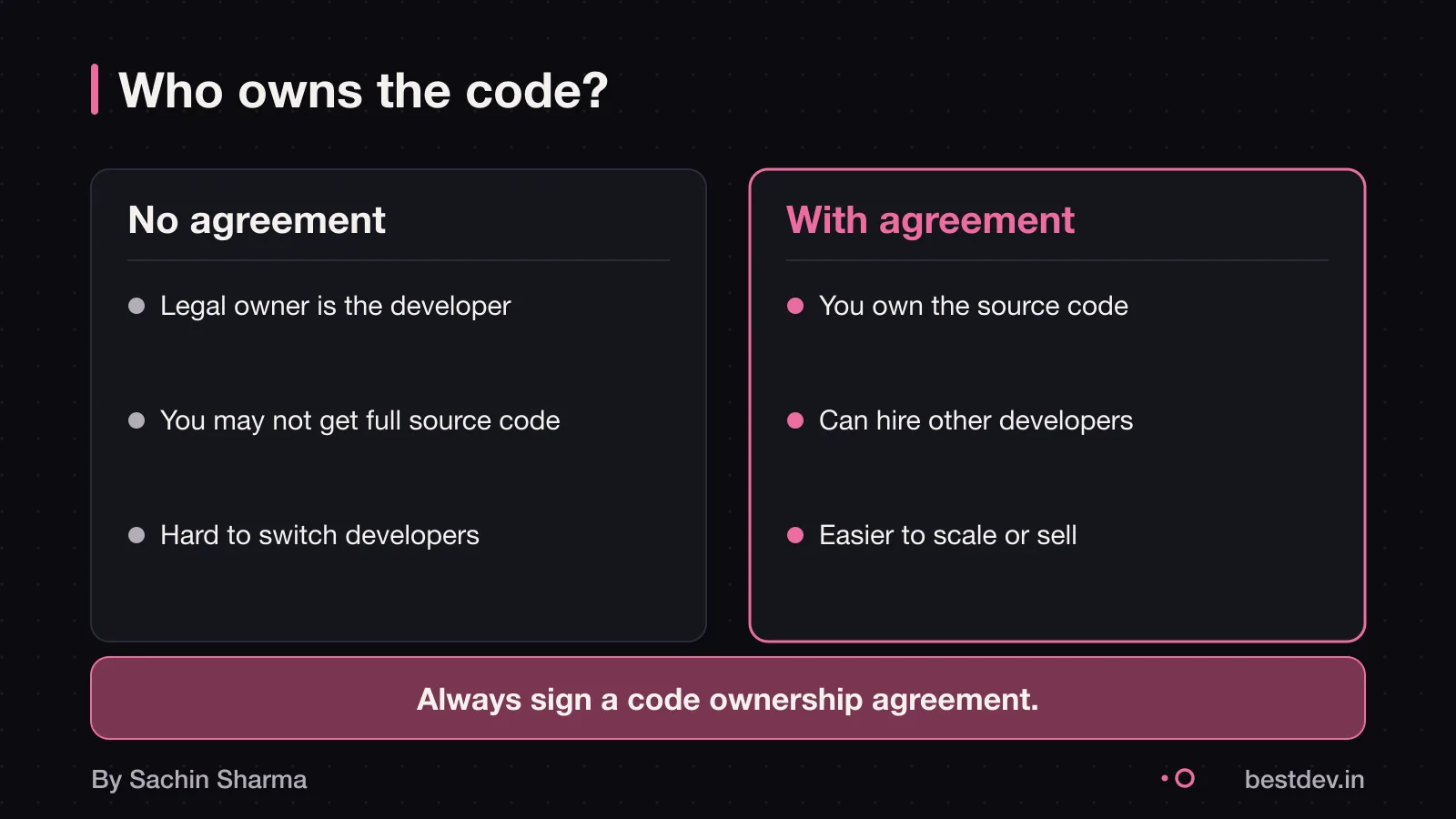
You may own the source code if your contract assigns copyright ownership to you in writing. Without a written agreement, the author of the code or their employer is usually considered the first legal owner of copyright. Even if you paid for the work, the developer may still hold copyright unless it is assigned to you in writing.
Some commercial software contracts expressly specify which party will own the copyright in the code. When you, as the customer, provide the contract, it may state that you will own the software. But if you skip the contract or use a vague one, you risk losing control over your app. You may not be able to update it. You may not be able to switch developers. You may not be able to sell your business without legal trouble.
For freelancers, if the contract does not clearly assign intellectual property rights to you, you may retain ownership by default. This means they may have the right to reuse parts of the code or restrict access, unless the contract says otherwise. To avoid this, insist on a written agreement that assigns copyright to you.
To check this, ask your developer whether the contract assigns copyright to you in writing. You can also read more about how to secure your rights in the guide on can I get the source code of my app?.
How much does maintenance cost per month?
For planning, a stable app with limited changes may cost ₹15,000 to ₹35,000 per month to maintain. This includes routine checks, minor bug fixes, and updates to keep the app running on new phone versions. Active maintenance costs ₹35,000 to ₹75,000 per month. This covers more frequent updates, performance tuning, and user feedback fixes. Business-critical support costs ₹75,000 to ₹2 lakh or more per month. This includes 24/7 monitoring, instant response to outages, and dedicated staff.
Three factors decide your monthly cost. First, what must be monitored: apps with payment systems, student data, or live video need more checks. Second, how often you release updates: monthly updates cost less than weekly ones. Third, how fast help must arrive when something breaks: a 30-minute response costs more than a 24-hour one.
You can reduce costs by freezing features, using stable tools, and setting clear response times. Do not skip maintenance, outdated apps break, lose data, and fail audits. If your developer does not share a maintenance plan, ask for one before launch.
Worked example: cost breakdown for a live class app
As an estimate, a live class app in India costs ₹10 to 20 lakhs as a base range. This base cost assumes a working app with user accounts, a dashboard, and basic admin tools. It does not include advanced features or offline access.
The largest cost driver is live video classes. These add ₹3 to 6 lakhs to the build. This covers real-time streaming, low-latency delivery, screen sharing, in-class chat, and recording storage. You need strong servers and good network design to avoid lag or dropouts.
This includes video hosting, adaptive bitrate streaming, and a content library interface. Assessments and quizzes add ₹1 to 2.5 lakhs. This covers question banks, timers, auto-grading, and result reports.
This allows teachers to see student activity, quiz scores, and time spent per lesson. Offline access adds ₹1 to 2 lakhs. This needs local storage, encryption to prevent copying, and sync logic when the device reconnects.
As an estimate, total cost ranges from ₹17.1 lakhs to ₹30.5 lakhs when you add all features:
| Feature | Cost (₹) | Evidence |
|---|---|---|
| Base app | 10 to 20 lakhs | |
| Live video classes | 3 to 6 lakhs | |
| Recorded content | 1.5 to 3 lakhs | |
| Assessments | 1 to 2.5 lakhs | |
| Progress tracking | 60K to 1.5 lakhs | |
| Offline access (adder) | 1 to 2 lakhs |
This estimate assumes a single platform (iOS or Android), a simple admin panel, and no third-party integrations like payment gateways or LMS sync. Costs rise if you need cross-platform apps, AI features, or student analytics dashboards.
Related reading: one-page app brief template.
Questions people ask
What should I check before hiring a developer for an edtech startup?
Check that the developer understands how students learn and follows clear communication and timelines. They should also agree to full code ownership and privacy laws, where applicable. A clear contract should confirm these points before work starts.
What is a fair way to pay for a developer for an edtech startup?
Pay in milestones so you only pay when each part is done and you are satisfied. This protects your money and keeps the project on track. Use a written agreement to define each milestone clearly.
What happens to my code and accounts if we stop midway?
You only own the code if your contract says so in writing. Otherwise, the developer keeps legal rights to the work. Make sure you get access to all accounts and backups before ending the project.
How do I verify a developer's experience with edtech apps?
Look at their past work, check certifications, and ask for references with targeted questions. Most developers show their skills online. On platforms like Freelancer, you can also read feedback from past clients.
What legal compliance should an edtech app in India follow?
Your app may need to follow data privacy rules such as the DPDP Act, 2023. Sector-specific rules like the Online Gaming Regulation and Management Rules, 2026, if they apply. The Finance Act, 2026 brings some sections into force from 1 April 2026. Check this for your case with a chartered accountant or lawyer.
Can I hire a freelancer instead of an agency?
Yes, you can hire a freelancer, especially for smaller or well-defined parts of your app. Freelancer has a talent pool of over 90.3 million professionals and lists local job options in locations worldwide. For large or complex apps, an agency may offer more stability.
What technical skills are needed for an edtech app?
The app will likely need Flutter or React Native for mobile, WebRTC or AWS IVS for live classes, and secure cloud hosting. These tools support video, offline access, and growth. Check that your developer has hands-on experience with them.
Should I build the app with Flutter or React Native?
Flutter could be a strong choice for a custom, pixel-perfect design, as one source calls it the best option for such apps. Pick React Native if your team knows JavaScript or TypeScript well. Both work well, so the best choice depends on your app's needs and who is building it.
Assumptions behind the numbers
- App type determines base cost and time
- Each added feature increases cost
- Team size affects timeline but not cost directly
- Special needs like offline access add cost
A developer can only price what you describe. Fill the fields, and the brief writes itself.
Brief: quick commerce app

What kind of edtech app?
(not decided yet)

Which features do you need?
(not decided yet)

How big is your dev team?
(not decided yet)

When do you want to launch?
(not decided yet)

What is your budget?
(not decided yet)

Any special needs?
(not decided yet)

Please reply with: your assumptions, what is not included, milestones with something I can test, and who will write the code.
Ask every developer
Six questions back
- Who will write the code, by name?
- Which features are in your quote?
- How is peak load tested?
- What is not included?
- Whose name are the repository and store accounts under?
- What does the first month after launch cost?
Keep going